


Eclypse Retinal Serum: One Step Ahead | Retinol vs Retinal

Why we chose retinal over retinol and built an entire formula around making it work better.
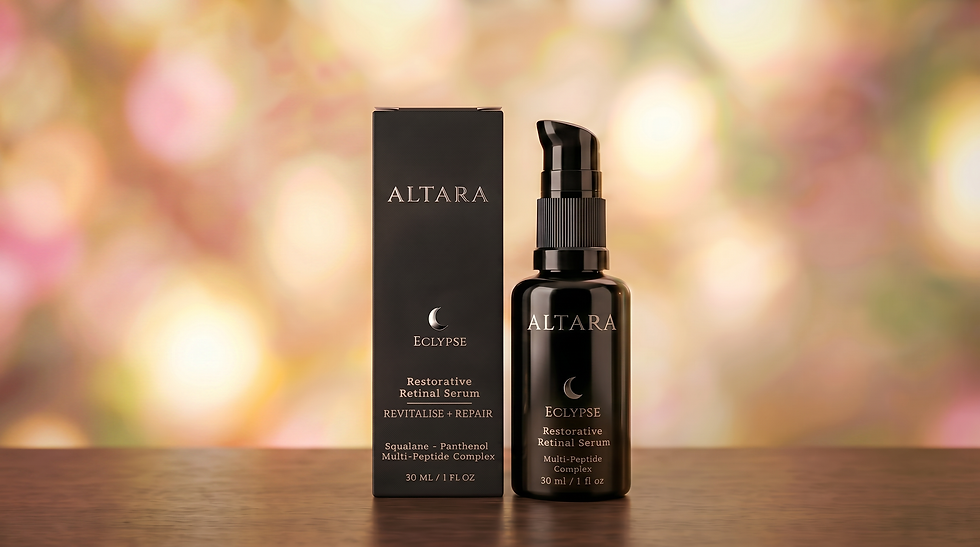
Retinoids are the most clinically validated category of cosmetic actives in existence. Decades of research, thousands of studies, and a clear mechanistic consensus; vitamin A derivatives drive cell turnover, stimulate collagen synthesis, reduce pigmentation, and meaningfully slow the visible signs of aging. None of that is in question.
What is often misunderstood is that not all retinoids are created equal. The ingredient on the label matters; specifically, how many enzymatic steps stand between what you apply and what your skin can actually use. Eclypse Retinal Serum was built on that distinction.
Retinol vs Retinal The Vitamin A Hierarchy; Why the Starting Point Matters
Every topical vitamin A derivative, regardless of what it says on the label, must be converted by the skin's own enzymes into retinoic acid, the biologically active form that binds retinoic acid receptors (RARs) and triggers the cellular changes responsible for every benefit retinoids are known for. The starting point in that conversion pathway determines how potent, how fast, and how irritating the final product will be.
The conversion ladder looks like this, from least to most potent:
Retinyl esters (retinyl palmitate, retinyl acetate); three enzymatic conversion steps to retinoic acid
Retinol - two enzymatic conversion steps
Retinal (retinaldehyde) - one enzymatic conversion step
Retinoic acid (tretinoin) - zero steps; directly bioactive; prescription only
Eclypse uses retinal, encapsulated retinaldehyde, the form that sits one single enzymatic step from prescription-strength retinoic acid. Retinol, by comparison, requires two. That one-step difference has measurable consequences.
At equivalent concentrations, retinal is estimated to be approximately 11× more potent than retinol based on comparative fibroblast studies measuring collagen and elastin gene expression. In practical terms, a formula containing 0.05% retinal delivers a comparable retinoic acid load to the skin as approximately 0.5% retinol. Clinical results appear faster, typically visible at 8-12 weeks versus 12-16+ weeks for equivalent-dose retinol, because fewer enzymatic steps means faster activation with less of the signal lost in conversion.
Retinal also carries an additional property retinol does not: direct antibacterial activity against C. acnes; the bacterium central to acne pathogenesis. For skin prone to congestion or breakouts, this dual action, (anti-aging and anti-bacterial), in a single molecule is a meaningful formulation advantage.
The honest tradeoff: retinal is inherently less chemically stable than retinol. It is more sensitive to light and air oxidation. This instability is not a reason to avoid it; it is a reason to formulate around it properly. Eclypse does exactly that.
Why Encapsulation Isn't Optional With Retinal
"Retinal delivers prescription-adjacent results without requiring a prescription, and without the retinization period that causes most people to abandon retinoids before they work."
Free retinal applied directly to skin would begin oxidizing before it meaningfully penetrates the stratum corneum. The result would be reduced efficacy, increased irritation, and an unstable product that degrades progressively from the first pump. None of those outcomes are acceptable.
Eclypse uses encapsulated retinal; the active is enclosed within lipid-based carrier particles that protect it from oxidation and photodegradation during both shelf life and application. Those carriers do more than protect. They fundamentally change how retinal behaves at the skin interface.
Rather than a concentrated burst of retinal arriving at keratinocytes simultaneously; triggering the inflammatory response responsible for the peeling, redness, and discomfort of the "retinization" period, encapsulation creates a sustained, controlled release. The skin receives a steady, metered dose of retinal that is converted to retinoic acid progressively, at a rate the skin can manage. The benefits accumulate without the inflammatory spike.
Encapsulation technology also improves dermal penetration by 2-3× compared to conventional retinoid emulsions. The carrier particles deposit preferentially in follicular channels and integrate with the stratum corneum's lipid matrix, releasing their payload progressively as they are absorbed deeper into the skin. The result is more active reaching target cells, not less at a lower nominal concentration, with significantly better tolerability.
Eclypse is formulated at 0.10% encapsulated retinal; the concentration at which Kwon et al. (2018) documented improvement in overall photoaging markers in 95% of subjects and statistically significant periorbital wrinkle reduction over 12 weeks. This is a clinically active dose, not a marketing inclusion.
A Formula Built to Support, Not Just Deliver
The Multi-Peptide Complex; Collagen from Two Directions
Eclypse contains Palmitoyl Tripeptide-1 + Palmitoyl Tetrapeptide-7 at 2.0% combined; the Matrixyl 3000 complex, one of the most extensively studied peptide pairs in cosmetic science.
Palmitoyl Tripeptide-1 (Pal-GHK) is a matrikine; a peptide that mimics the signal released when collagen is degraded. It communicates to dermal fibroblasts that matrix repair is needed, stimulating the synthesis of new Type I, III, and IV collagen and fibronectin. Palmitoyl Tetrapeptide-7 (Pal-GQPR) is derived from immunoglobulin G and operates through a complementary mechanism: it suppresses IL-6, the inflammatory cytokine that activates matrix metalloproteinases and accelerates the breakdown of existing dermal matrix. Together, they address collagen loss from two directions simultaneously; build more, lose less.
The clinical data supports the combination. Sederma's trials documented a 45% reduction in deep wrinkle area at two months, a 68% reduction in surface area occupied by deep wrinkles at six months, a 46% increase in skin hydration at 28 days, and nearly 20% improvement in skin tonicity. These are not single-study figures; they have been replicated across subsequent trials and represent one of the stronger evidence bases for a cosmetic peptide complex.
The pairing of Matrixyl 3000 with retinal is specifically deliberate. Retinal drives collagen synthesis through the retinoic acid receptor pathway. Matrixyl 3000 drives collagen synthesis through matrikine signaling. These are entirely distinct biological mechanisms, which means they compound each other's effects rather than simply overlapping. The formula's collagen-stimulating capacity is genuinely additive.
Eclypse also includes Acetyl Hexapeptide-8 at 0.50%; a signal peptide that competitively inhibits the SNARE protein complex at the neuromuscular junction. By reducing the intensity of repeated facial muscle contractions, it addresses expression line formation through a mechanism entirely separate from matrix remodeling, approaching the problem from the outside in while retinal and the matrikines work from the inside out.
Barrier-First Philosophy; Building the Foundation Retinoids Require
Retinoids ask a great deal of the skin. Accelerating cell turnover, remodeling the extracellular matrix, and upregulating multiple synthesis pathways simultaneously is biologically demanding work. Every supporting ingredient in Eclypse was selected with that reality in mind.
Ceramide NP (0.30%) replenishes the intercellular lipid matrix of the stratum corneum; the mortar that holds skin cells together and controls transepidermal water loss. Ceramides constitute approximately 50% of this matrix by composition. Including ceramide NP in a retinal formula is not incidental: retinoid-induced cell turnover can temporarily displace stratum corneum lipids, transiently increasing barrier vulnerability. Ceramide supplementation directly mitigates this effect, supporting barrier continuity throughout the active remodeling process.
Ectoin (0.30%) is a cyclic amino acid naturally produced by microorganisms living in extreme environments, salt lakes, hot springs, desert soils, as a survival mechanism against physical and osmotic stress. In skin, ectoin organizes a stable hydration shell around cellular proteins and membranes, physically protecting them from heat, UV radiation, and osmotic disruption without interfering with cellular metabolism. Over 200 peer-reviewed studies document its barrier-protective and anti-inflammatory activity, including suppression of UV-induced IL-6 and TNF-α. At 0.30%, ectoin meaningfully supports the skin's cellular stress response during the transition period that retinoid use initiates.
Beta-Glucan (0.20%) activates skin-resident immune cells, Langerhans cells and dendritic cells, upregulating wound-healing cytokines and increasing collagen deposition at the extracellular matrix level. In a retinal serum context, beta-glucan supports the skin's recovery infrastructure, reinforcing its ability to respond productively to the remodeling stimulus.
Niacinamide (2.0%) may be the most broadly active supporting ingredient in the formula. It inhibits melanosome transfer from melanocytes to keratinocytes; the mechanism through which pigmentation spots form and persist, meaning it addresses hyperpigmentation through a complementary pathway to retinal's pigmentation benefits. Simultaneously, niacinamide reduces TEWL, suppresses inflammatory cytokines, and increases ceramide synthesis. Its inclusion also provides a practical benefit during the retinization transition: niacinamide's anti-inflammatory properties help prevent post-inflammatory hyperpigmentation in sensitive or melanin-rich skin types.
Allantoin (0.30%) and Panthenol (1.0%) complete the soothing architecture; allantoin promoting epithelial healing and reducing surface irritation; panthenol (pro-vitamin B5) converting to pantothenic acid in skin, supporting barrier repair and moisture retention, and measurably reducing the irritation potential of active-dense formulas.
The Hydration and Lipid Layer; Feel and Function Together
The emulsion base of Eclypse was engineered with the same deliberateness as the active layer. Glycerin (4.0%) and Propanediol (3.0%) provide complementary humectant action, drawing moisture from the environment and deeper skin layers into the stratum corneum and maintaining the hydration gradient that healthy barrier function requires. Sodium Hyaluronate (0.20%), the lower-molecular-weight sodium salt of hyaluronic acid, penetrates more effectively than standard HA, delivering hygroscopic water-binding capacity deeper into the dermis.
The lipid phase, Squalane (5.0%) and Jojoba Oil (3.0%), was selected for biological compatibility above all else. Squalane is a hydrogenated, oxidatively stable form of squalene, a lipid naturally found in human sebum. It provides emolliency and barrier reinforcement without comedogenic risk. Jojoba's ester composition closely resembles human sebum, giving it exceptional skin compatibility and helping regulate barrier lipid balance without occluding pores.
Tocopherol (0.30%) - vitamin E provides lipid-phase antioxidant protection, guarding unsaturated fatty acids in cell membranes from oxidative damage. In a retinal formula, this is particularly relevant: both the retinal itself and the unsaturated lipids in the formula and in skin are oxidation-vulnerable. Tocopherol's presence is defensive at two levels simultaneously.
Rosemary CO₂ Extract (0.10%) - a supercritical extraction rich in carnosic and rosmarinic acid, functions as a natural antioxidant stabilizer within the formula matrix, protecting the active layer during shelf life and providing secondary antioxidant benefit at the skin surface.
The Formulation Details That Separate Good from Clinical
Three formulation decisions in Eclypse are non-negotiable; and they are the decisions most brands make incorrectly.
pH 5.5-6.0. This is the window at which retinal is most chemically stable and at which the supporting peptides and barrier actives function optimally. Formulating outside this range compromises both the activity and the shelf life of the active. Eclypse's pH was set before any other formulation decision.
Opaque airless pump packaging. Retinal oxidizes rapidly on exposure to light and oxygen. An airless pump prevents oxygen ingress with every use; a vulnerability in every standard jar and open-mouth bottle. The opaque housing blocks photodegradation. Together, they ensure that the retinal in the last application is performing as well as the retinal in the first. This is not a packaging preference. It is a delivery requirement.
Lightweight emulsion texture. The emulsion architecture allows water-soluble actives, (niacinamide, peptides, ectoin, beta-glucan, sodium hyaluronate), and lipid-soluble actives, (retinal, tocopherol, squalane), to coexist in a single, stable vehicle that absorbs cleanly, leaves no residue, and layers comfortably under a moisturizer when needed. The formula is substantive in its chemistry and effortless in its feel. That balance is a formulation achievement, not a coincidence.
Who Eclypse Is For
Eclypse is not a weak retinoid made accessible through low concentration. It is a clinically active retinoid made accessible through intelligent formulation. The encapsulated delivery, ceramide reinforcement, ectoin stress protection, and niacinamide barrier support are not safety nets; they are the reason Eclypse can be used nightly, from the beginning, without the retinization drama that causes most people to abandon retinoids before they see what retinoids can actually do.
For those earlier in their retinoid journey: Eclypse provides retinal-level efficacy with a tolerance profile that makes consistent use realistic. Consistency, over any single product strength, is the primary driver of retinoid outcomes.
For experienced users who have plateaued on retinol: retinal at 0.10%, delivered encapsulated and paired with a collagen-stimulating multi-peptide complex, represents a genuine step forward in the vitamin A hierarchy without crossing into the prescription category.
What to expect: texture refinement typically begins at 6-8 weeks. Measurable improvement in fine line depth and tone evenness at 10-12 weeks. Long-term collagen remodeling continues well beyond that, as the retinal and matrikine pathways work in parallel on the deeper architecture of the dermis. Apply nightly after cleansing. Follow with moisturizer if desired. SPF the next morning, not because retinal causes significant photosensitivity, but because any active driving cell turnover makes UV protection more relevant, not less.
The Altara Perspective; Why Eclypse Is the Retinoid We Were Willing to Make
Most retinoid products make a choice between potent and tolerable, as if those two outcomes are in fundamental tension. Eclypse was built on the conviction that this is a formulation problem, not a biological one, and that solving it properly requires selecting the right form of vitamin A, protecting it correctly, delivering it intelligently, and surrounding it with every ingredient the skin needs to respond well to the work being asked of it.
The retinal was chosen for where it sits in the vitamin A hierarchy. The encapsulation was chosen to protect it and control its release. The peptides were chosen to compound its collagen-stimulating effects through a different biological pathway. The ceramides, ectoin, and niacinamide were chosen because the skin receiving that level of biochemical stimulation deserves the infrastructure to respond without distress.
Every ingredient in Eclypse earns its place. That is what clinical-luxury means at Altara.
Full Ingredient List (INCI):
Aqua (Water), Squalane, Simmondsia Chinensis (Jojoba) Seed Oil, C12‑15 Alkyl Benzoate, Glycerin, Propanediol, Glyceryl Stearate Citrate, Cetearyl Alcohol, Niacinamide, Panthenol, Palmitoyl Tripeptide‑1, Palmitoyl Tetrapeptide‑7, Acetyl Hexapeptide‑8, Ectoin, Beta‑Glucan, Allantoin, Ceramide NP, Xanthan Gum, Sclerotium Gum, Sodium Hyaluronate, Tocopherol, Rosmarinus Officinalis (Rosemary) Leaf Extract (CO₂), Sodium Phytate, Retinal, Benzyl Alcohol, Salicylic Acid, Sorbic Acid, Sodium Hydroxide, Citric Acid.
Eclypse is the retinoid built for people who want results and respect for their skin in the same bottle. Explore the full Altara clinical collection, and if you have questions about where Eclypse fits in your current routine, we're always here.
ALTARA SKINCARE
This article is for educational purposes and does not constitute medical advice. Consult a qualified healthcare provider for individual skincare concerns. Results may vary.
Key Ingredient Highlights:
Ingredient | Concentration | Primary Function | Why It's in Eclypse |
Encapsulated Retinal | 0.10% | Retinoic acid precursor (1 step) | Clinically active vitamin A; 11× more potent than retinol at equal % |
Palmitoyl Tripeptide-1 + Palmitoyl Tetrapeptide-7 | 2.0% | Matrikine collagen signaling + IL-6 suppression | Matrixyl 3000; 45% wrinkle area reduction at 2 months |
Acetyl Hexapeptide-8 | 0.50% | SNARE complex inhibition | Reduces expression line depth through muscle-relaxing signal |
Ceramide NP | 0.30% | Stratum corneum lipid matrix repair | Counters retinoid-induced barrier disruption; TEWL reduction |
Ectoin | 0.30% | Cellular stress protection | 200+ studies; UV, osmotic and heat stress defense |
Niacinamide | 2.0% | Melanin transfer inhibition + ceramide synthesis | Brightening + barrier support + anti-inflammatory |
Beta-Glucan | 0.20% | Immune cell activation + collagen deposition | Supports recovery infrastructure during active remodeling |
Squalane | 5.0% | Emolliency + barrier reinforcement | Sebum-identical; non-comedogenic lipid support |
Tocopherol | 0.30% | Lipid-phase antioxidant | Protects retinal and membrane lipids from oxidation |
Sodium Hyaluronate | 0.20% | Deep dermal hydration | Low-MW HA for superior dermal penetration vs. standard HA |

Comments