


The Different Forms of Vitamin C in Skincare, And Which One Your Skin Actually Needs

Vitamin C is one of the most researched and transformative ingredients in modern skincare. But not all forms of vitamin C are created equal, and choosing the right one can mean the difference between a bright, firm, even complexion… or irritation, oxidation, and wasted product.
This guide breaks down the major forms of vitamin C, how they work, and the pros and cons of each so you can choose the right formula for your skin.
Why Vitamin C Matters
Vitamin C is a powerhouse antioxidant that:
Brightens uneven tone
Supports collagen production
Protects skin from environmental stress
Reduces the look of fine lines
Helps fade dark spots and post‑inflammatory pigmentation
But the catch? Vitamin C is notoriously unstable, which is why different derivatives exist.
1. L‑Ascorbic Acid (LAA)
The purest, most potent form of vitamin C.
Pros
Strongest clinical evidence
Fastest results for brightening and firming
Directly active, no conversion needed
Excellent for pigmentation and photoaging
Cons
Highly unstable; oxidizes quickly
Can irritate sensitive skin
Requires low pH (≤3.5) to penetrate
Short shelf life
Best for: Experienced users, pigmentation, strong anti‑aging routines.
2. Sodium Ascorbyl Phosphate (SAP)
Gentle, stable, and great for acne‑prone skin.
Pros
Very stable at neutral pH
Low irritation
Proven antimicrobial benefits for acne
Beginner‑friendly
Cons
Less potent than LAA
Slower visible results
Best for: Sensitive or acne‑prone skin.
3. Magnesium Ascorbyl Phosphate (MAP)
Hydrating and soothing. Ideal for reactive skin.
Pros
Very stable
Works at skin‑friendly pH
Hydrating and gentle
Cons
Lower potency
Requires conversion to LAA
Best for: Dry, sensitive, or compromised skin.
4. Ascorbyl Glucoside (AA2G)
A stable brightening derivative used in many modern serums.
Pros
Excellent stability
Low irritation
Good brightening performance
Cons
Conversion efficiency varies
Less collagen‑stimulating than LAA
Best for: Daily brightening and antioxidant support.
5. Tetrahexyldecyl Ascorbate (THD Ascorbate)
Oil‑soluble, deeply penetrating, and perfect for luxury formulations.
Pros
Extremely stable
Penetrates deeper through lipid barrier
Low irritation
Great for mature or dry skin
Cons
More expensive
Evidence base smaller than LAA
Conversion rate varies
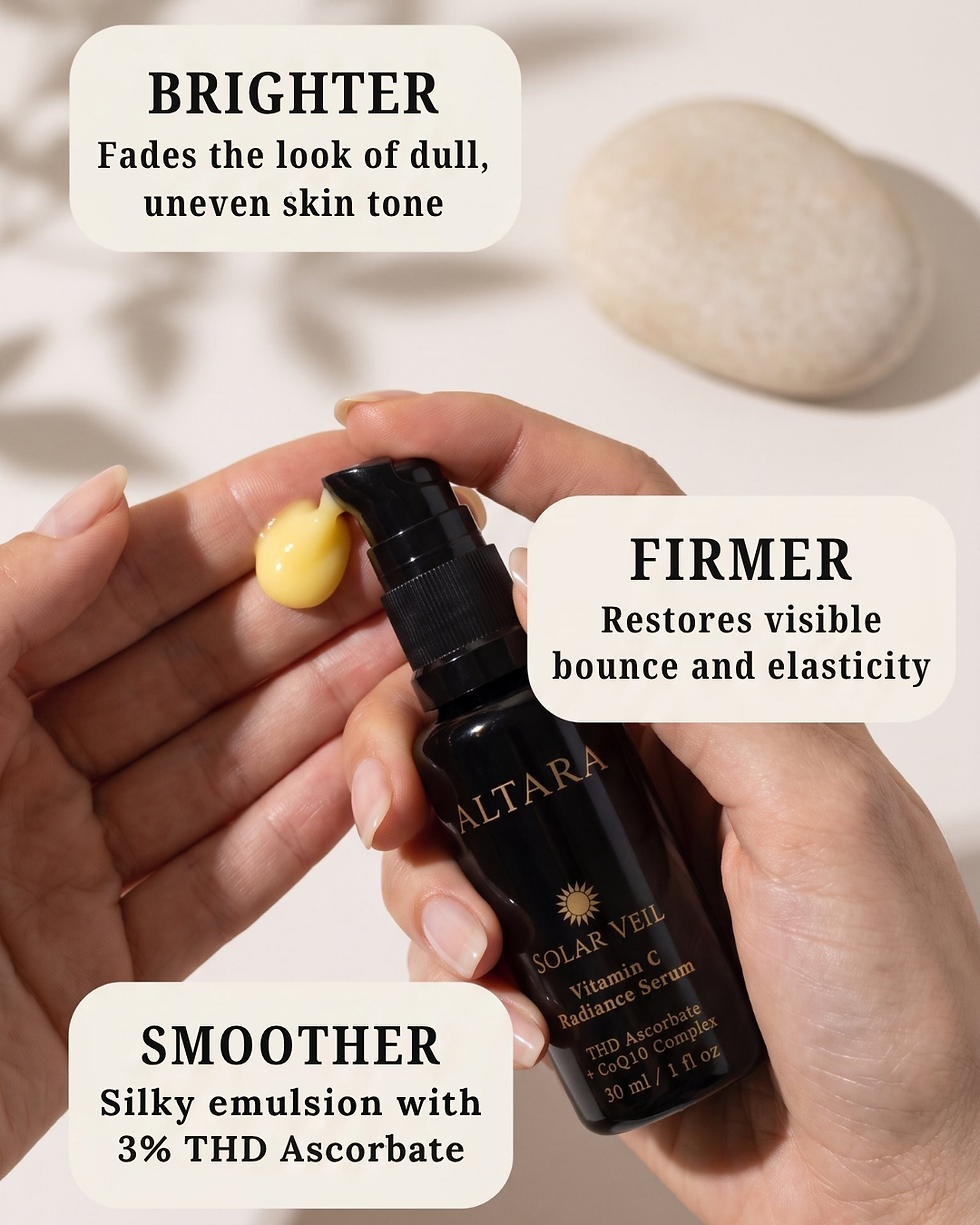
Best for: Anti‑aging, dry skin, nighttime serums. Altara THD hero product Solar Veil:
6. 3‑O‑Ethyl Ascorbic Acid
A popular modern derivative with strong brightening benefits.
Pros
Very stable
Fast‑absorbing
Effective for pigmentation
Cons
Potency depends on formulation quality
Requires conversion to LAA
Best for: Pigmentation, lightweight daytime serums.
7. Ascorbyl Tetraisopalmitate (ATIP / VC‑IP)
Oil‑soluble and nourishing. Ideal for barrier‑supportive formulas.
Pros
Penetrates well into lipid barrier
Good for dry or mature skin
Some evidence for melanin inhibition
Cons
Expensive
Less research than LAA
Best for: Dry skin, anti‑aging, premium serums.
8. Ascorbyl Palmitate
An older derivative with limited modern use.
Pros
Oil‑soluble
Low irritation
Cons
Poor stability
Weak evidence for topical benefits
Can become pro‑oxidant under UV
Best for: Generally avoided in advanced formulations.
Which Vitamin C Is Right for You?
For fast results:
L‑Ascorbic Acid
For sensitive or acne‑prone skin:
Sodium Ascorbyl Phosphate (SAP)
For dry or mature skin:
THD Ascorbate or ATIP
For pigmentation:
L‑Ascorbic Acid, Ethyl Ascorbic Acid, THD Ascorbate
For daily gentle brightening:
Ascorbyl Glucoside (AA2G)
The Bottom Line
Vitamin C is a hero ingredient, but choosing the right form matters. Stability, pH, skin type, and formulation quality all influence how well your serum performs.
If you’re building a routine or developing a product, the best vitamin C is the one that fits your skin’s needs and stays stable long enough to deliver results.

Comments